Why Is Dialogue Between Engineers and Doctors Becoming Essential? An Interview with Véronique Le Chevalier
From artificial intelligence to medical imaging, medical devices, and bioengineering, technology is profoundly transforming the world of healthcare. For these innovations to truly meet the needs of patients and healthcare providers, dialogue between engineers and healthcare professionals has become essential. Véronique Le Chevalier, a faculty member and researcher in the Cancer Data Science unit, an associate researcher at the MICS laboratory, and CentraleSupélec’s “Health” liaison since December 2024, discusses developments in the sector and the role of engineers in future healthcare ecosystems.
Le 28 October 2026#Ecole
Image
Partager
Just a few years ago, health wasn’t something people automatically associated with an engineering school. What has changed?
I would even say that even today, health is not immediately associated with an engineering school. Many students and colleagues are surprised to learn that it is one of the eight core themes of the School’s curriculum (through the “Life, Health, and Environment” track) and one of the pillars of the School’s strategic plan. And yet, CentraleSupélec is in fact a long-standing player in the field of health: as early as 2014, a survey conducted by Emmanuel Odic for Supélec and by me for École Centrale Paris—prior to the merger of the two schools—revealed that most of our laboratories had at least one project related to health, if not the primary focus of a research team’s work. This finding is, in fact, entirely consistent with trends in the healthcare sector, where traditional engineering disciplines are increasingly making their mark: genome sequencing, microfluidics, organs-on-a-chip, gerontechnologies, virtual reality in physical therapy, digital twins, ventilators, robot-assisted surgery, medical imaging technologies, prosthetics and exoskeletons, tissue engineering, pharmacokinetic modeling for the development of new molecules, and the organization of hospital departments… Not to mention the indispensable field of artificial intelligence, which transforms multimodal and heterogeneous data streams from sensors, imaging, or biological analysis devices into clinical decision-making tools. All these recent innovations, which have revolutionized the practices of healthcare professionals, have emerged thanks to synergies between healthcare and engineering, offering new and exciting career opportunities for our engineering students.
Why has dialogue between engineers and physicians become a strategic issue today?
Innovation in healthcare can no longer be driven by a single discipline: collaboration between engineers and healthcare professionals is essential to developing technology that can truly benefit patients. One famous counterexample is the laborious rollout of the algorithm developed by Google for diagnosing diabetic retinopathy, which—despite achieving performance comparable to that of expert ophthalmologists (over 90% sensitivity and specificity), ran into numerous difficulties related to the socioeconomic context of Thai hospitals and issues with acceptance by medical staff and the patients themselves [ref: Baylor, Elizabeth & Beede, Emma & Hersch, Fred & Iurchenko, Anna & Ruamviboonsuk, Paisan & Vardoulakis, Laura & Wilcox, Lauren. (2020). A Human-Centered Evaluation of a Deep Learning System Deployed in Clinics for the Detection of Diabetic Retinopathy. 10.1145/3313831.3376718]. At CentraleSupélec, our research projects are grounded in the real-world needs of the healthcare sector thanks to strong collaborations with major organizations such as the AP-HP and the Gustave Roussy Institute. On the educational side, approximately 30% of the courses taken by our students in the “Healthcare & Services in Biomedical Sciences” (HSB) track are taught by practicing physicians themselves, in order to introduce students to the challenges and needs of the field and to equip them to engage in this crucial interdisciplinary dialogue.
What major transformations in the medical world make this collaboration essential?
The medical world is facing numerous changes and new challenges, for which collaboration with engineering is indeed becoming indispensable. An aging population, the rise in chronic diseases, the shortage of medical professionals, and the worsening of medical deserts are forcing us to rethink the entire care pathway to maintain both the quality of care, equitable access, and the economic viability of a system under strain, particularly in the face of health crises. The COVID-19 pandemic has thus popularized telemedicine consultations, the number of which in France rose from 80,000 in 2019 to 9.4 million in 2021. Engineers are also contributing to the growth of gerontechnology and the use of virtual and augmented reality for physical therapy rehabilitation, and to the analysis of big data from connected devices to provide doctors with better tools for prevention, screening, and monitoring patient outcomes. Artificial intelligence is, of course, a driving force behind these transformations, provided it is truly reliable, accurate, robust, explainable, certifiable, and accepted by both healthcare providers and patients—whether it involves MRI-assisted diagnosis or the analysis of an immune response. The transformations driven by engineering—beyond the digital realm—also extend to medical devices themselves: biomedical sensors, implants, therapeutic devices using lasers or stimulation, surgical robotics, and cutting-edge imaging—all of which have clinical significance only when designed in collaboration with those who will use them at the patient’s bedside. Finally, life sciences engineering—biomaterials for bone reconstruction, gene therapy, tissue engineering, biopharmaceutical production, controlled drug delivery, and the fight against bacterial biofilms—opens up an entirely new field where biology and engineering can no longer advance independently of one another.
CentraleSupélec does not seek to train physician-engineers but rather engineers capable of working with the medical community. Why this choice?
In fact, CentraleSupélec also trains physician-engineers through its involvement as a founding member of the Averroes program at Paris-Saclay, which has precisely this objective. This program allows our engineering students (approximately 2 to 3 each year) to earn credits in medicine or pharmacy alongside their studies at CentraleSupélec, so they can enter a health-related degree program in their third year after graduating. These rare and highly sought-after dual-profile engineer-physicians, which are rare and highly sought-after, are destined to become leaders in research or innovation within their chosen medical specialty, as they are able to both identify needs—through their patient care experience—and develop technologies to address them—thanks to their engineering skills. The vast majority of our students, however, go on to pursue engineering careers within the medical field, actively collaborating with various stakeholders in the healthcare system, including regulatory and legal entities.
What is CentraleSupélec’s current ambition in the field of healthcare? How is this reflected in its educational programs, research, and partnerships?
Today, healthcare is one of the strategic priorities supported by the School in its 2030 plan.
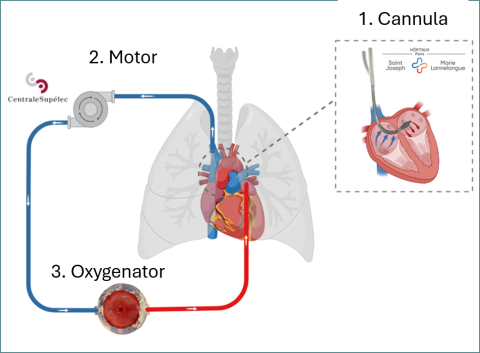
On the research front, about 40 full-time researchers—and more than 100 people in total—are engaged in this work across 15 of our laboratories. This research can be organized into four thematic areas: - Services for health care systems, primarily through the work of theLGI, such as analyzing the impact of COVID-19 on oncology care, the organization of maternity and emergency departments, and the health economic analysis of medical procedures (transplantation, coronary angioplasty, etc.) - Materials for healthcare, for example at theLMPS with research on biomechanics and biological materials (dentin, bone reconstruction) - Medical devices, particularly at GEEPS through research on the use of cold plasmas for surface decontamination in medical settings, the design of new magnetoelectric transducers for biomedical applications or microwave devices for the non-invasive diagnosis of biological tissue pathologies, as well as the development of an artificial lung pump through the Bioart Lung project.
Image
Projet BioArtLung : moteur pour poumon artificiel développé au GeePs, sous la responsabilité de Laure Aubrège (Hôpital Marie Lannelongue).
- Imaging & Information, which brings together nearly half of the School’s researchers involved in health-related activities, drawing on biostatistics, mechanistic models, control systems, artificial intelligence (generative or otherwise), multimodal data integration, digital twins, causal inference, etc. Examples include the CVN’s work in imaging/computer vision on the diagnosis of intestinal occlusions or the analysis of histopathological images for the treatment of liver cancer; and the work of L2S on closed-loop brain stimulation, the control of bacterial populations, the optimization of ventilators, and the search for longitudinal biomarkers in oncology. At MICS, oncology is at the heart of the Biomathematics team’s activities; since January 1, 2026, this team has been part of the Cancer Data Sciences unit within the PRISM university-hospital institute. Designated as a France 2030 initiative, its goal is to develop new artificial intelligence methods to improve cancer diagnosis and treatment strategies through increasingly personalized medicine.
Image
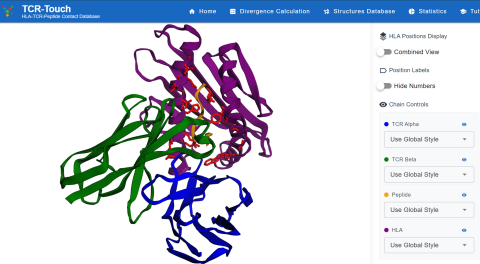
Vue 3D d'une protéine HLA, peptide et récepteur d'un lymphocyte T. https://tcrtouch.centralesupelec.fr ; collaboration between INSERM UMR1342, MICS laboratory of CentraleSupélec, Institut Gustave Roussy, and the Laboratory of Immunology and Histocompatibility of Hôpital Saint-Louis)
In terms of education, students have the opportunity to explore the field of healthcare as early as their first and second years through thematic modules, projects, and elective courses in bioengineering, biostatistics and AI applied to healthcare, genomics and synthetic biology, biomechanics, neuroscience, electronics, or biomedical robotics: through presentations by our industrial partners (ranging from startups to major players in the biomedical field) or academic partners (AP-HP, Gustave Roussy, Inserm, the Brain Institute, among others), students can engage with topics such as tissue reconstruction, biofilm development, biomarker discovery within epidemiological cohorts, predicting treatment responses, and the use of medical images for diagnosis and prognosis. In their second year, students can embark on a customized track at the Institut de Formation Supérieur Biomédicale (IFSBM) in Paris-Saclay, allowing them to immerse themselves in the hospital setting and engage with internationally renowned physicians and researchers on major challenges in the healthcare sector. Those who wish to pursue this path join the approximately 40 students who enroll each year in the Healthcare & Services in Biomedical (HSB) track, opening up career opportunities with startups, major industrial groups, healthcare facilities, public agencies, consulting firms, or research laboratories (depending on the year, up to 25% of students in the program go on to pursue a Ph.D.). The HSB track offers the option to pursue a Master’s degree (M2) from Paris-Saclay University concurrently, in order to specialize in computational neuroscience (CNN), biomedical imaging (IBM), mathematics for the life sciences (MSV), or robotics & human movement (IDSMH).
At the European level, the School participates in the EUGLOH network, an alliance of universities dedicated to global health. In terms of continuing education, this ambition is being realized through the launch of the Paris-Saclay Digital Health CMA (Numiacare) project, under which we are partnering with Exed to offer a specialized master’s degree in “Digital Health,” which began in September 2026.
On the entrepreneurial front, the “21st by CentraleSupélec” innovation accelerator supports the development of innovative, high-impact companies, with a priority sector identified as Health & Care. Since 2025, 22 HealthTech and MedTech startups have benefited from this support, either through incubation (Early Stage) or acceleration (Seed/Series A). In total, 21st by CentraleSupélec supports more than 150 startups per year. The incubator supports students and researchers who wish to transform their projects or research into startups (particularly deep tech), ensuring that innovation does not remain confined to the laboratory but directly informs the care pathway.
What skills must an engineer develop to collaborate effectively with doctors, biologists, pharmacists, or healthcare lawyers?
Beyond scientific and technical skills (AI, signal processing, modeling, biostatistics, bioinformatics, imaging, robotics, biomechanics), our engineers must have a solid understanding of the challenges and inner workings of the healthcare system—whether in terms of medical developments (such as the rising prevalence of certain diseases in the population, like cancer, as well as the emergence of new treatments, medical devices, and technologies, imaging modalities, biosensors, etc.), organizational structure, or regulatory aspects. Access to the healthcare market is highly regulated, requiring certification procedures and—particularly in France—crucial access to reimbursement through Social Security, which can determine the success or failure of a medical innovation. We therefore aim to train engineers capable of working with professionals from different cultural backgrounds (through presentations by our industrial and hospital partners, as well as interactions with physicians) and who have the ability to understand the needs and constraints of healthcare providers thanks to numerous opportunities for interaction and immersion throughout the year (projects, conferences, IFSBM modules, visits, etc.). The students we recruit into our program share a desire for a meaningful career with a strong societal impact in the service of patients and a professional commitment that ultimately contributes to nothing less than saving lives!
If you look ahead ten years, how do you envision collaboration between engineers and healthcare professionals? What new challenges will they need to tackle together?
In practical terms, we should see the continued creation of hybrid teams where engineers, data scientists, biologists, and clinicians work side by side on a daily basis. Barring a dramatic slowdown due to cost or energy resource constraints, digital technology should continue its rapid growth and permeation of all sectors; the “augmented practitioner” will be the norm: AI-assisted radiologists, robot-assisted surgeons, oncologists aided by personalized medicine algorithms, physical therapists supported by virtual or augmented reality, and so on. Patients are also evolving, becoming increasingly active participants in their own healthcare journeys: pre-diagnosed and informed through conversations with an LLM certified by medical regulatory agencies, guided in a personalized manner toward a consultation with a primary care physician or specialists, with a unified digital health record shared among all relevant medical departments. We are thus moving toward the emergence of an increasingly preventive and predictive form of medicine, supported by systematic sequencing and continuous monitoring via sensors, rather than a reactive approach to established disease. One of the key challenges will be the deployment of reliable and explainable artificial intelligence that preserves the confidentiality of patient data in compliance with the GDPR and promotes equitable access to care. Engineers will undoubtedly be at the heart of these future ecosystems.